
Hall VI, Ateliers and CraftUrushi5 min read
Lacquer: Layers of Patience
From urushi to Art Deco Paris: how lacquer is built coat by coat and why its depth cannot be hurried.
In a quiet workshop, a cabinet door rests in a wooden cupboard kept warm and damp, as if it were a living thing. It has already received many coats, each one thin as breath, each one polished before the next. Weeks from now its black will look deep enough to put your hand into. This is lacquer, and here is how it is made, where it travelled and why its depth cannot be hurried.
At a glance
- Asian lacquer, called urushi in Japan, is made from the sap of the lacquer tree.
- It is applied in many thin coats, each cured in warm, humid air and polished.
- Maki-e, Chinese carved lacquer and Coromandel screens are among the great Asian techniques.
- Jean Dunand and Eileen Gray, taught by Seizo Sugawara, brought lacquer to Art Deco Paris.
The sap of a tree
Asian lacquer begins as the sap of the lacquer tree, Toxicodendron vernicifluum, which grows in China, Korea and Japan. In Japan both the sap and the lacquer made from it are called urushi. The sap is gathered by making shallow cuts in the bark and collecting the milky resin that seeps out, a slow harvest in which each tree yields only a modest amount.
The raw sap is refined by stirring and gentle warming, which removes excess water and gives it an even, honey-like consistency, and it may be coloured with pigments: black traditionally obtained with iron, red with cinnabar or iron oxide. Raw urushi can irritate the skin, so lacquerers handle it with great care and long experience.
Once hardened, urushi becomes remarkably durable and resistant to water, which is why lacquered bowls, boxes and trays have been used every day for centuries, and why some lacquered objects survive from very early times.
Coat by coat
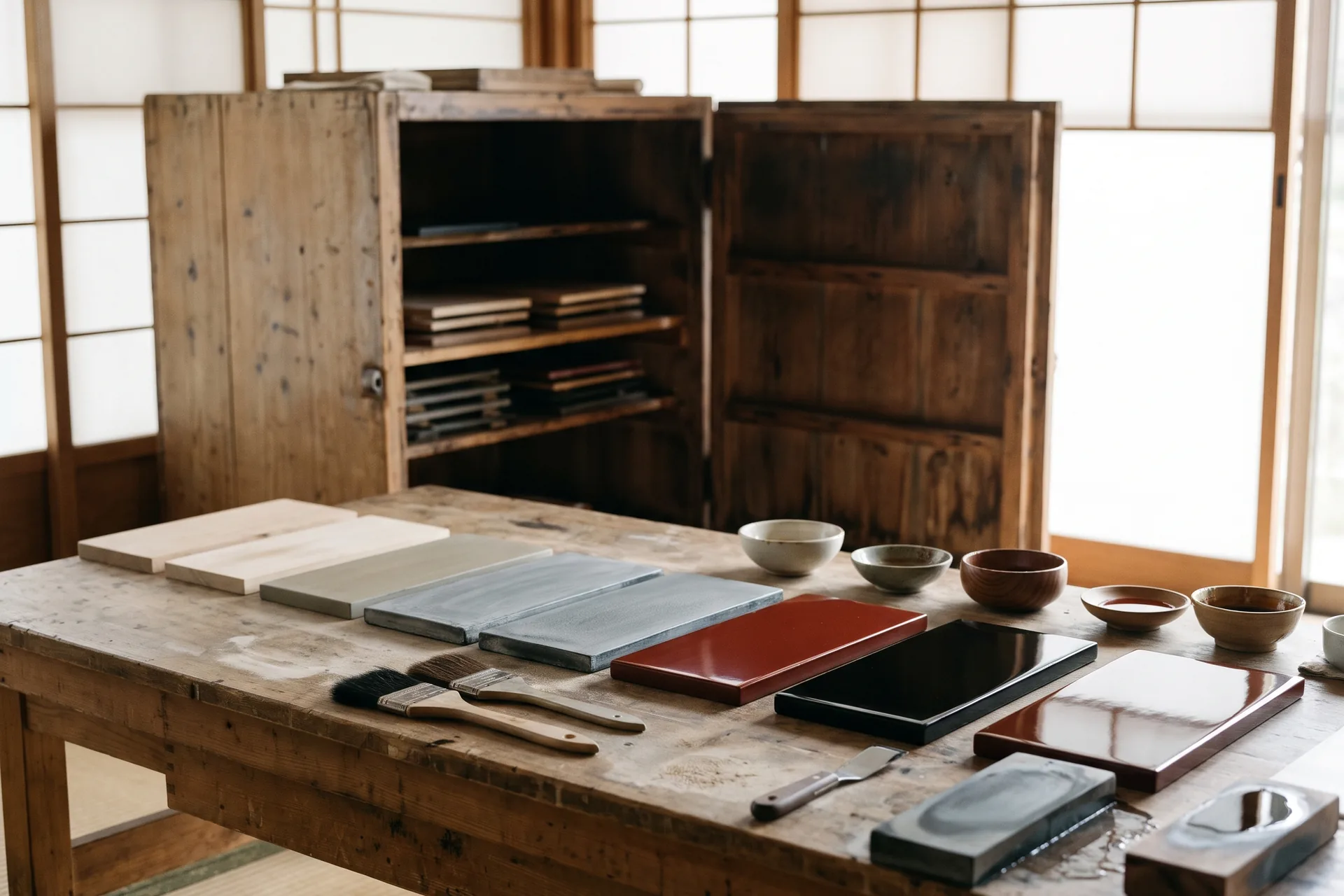
Lacquer is applied in many thin coats, usually over a core of wood, sometimes reinforced with hemp cloth and a ground of clay or powdered stone mixed with lacquer. Each coat must be thin, because a thick one would wrinkle as it hardens, and each is left to cure before the next is laid.
Curing is not drying. Urushi hardens through a slow chemical reaction that needs warmth and humidity, so workshops keep a closed cabinet, its wooden walls moistened, where pieces rest between coats. Once a coat has cured, it is rubbed smooth with fine charcoal, stone or powder, and only then does the next one follow.
The result is depth rather than mere shine. Because the surface is built and polished layer upon layer, light travels into it and back, and a fine black lacquer seems to have no bottom at all. That is why the craft cannot be hurried: its beauty lies in the accumulation of patient hours.
Techniques of the East
Over the centuries, Asian workshops developed a remarkable range of techniques. In Japan, maki-e, literally sprinkled picture, creates images by drawing a design in wet lacquer and sprinkling it with fine metal powders, often gold or silver, which are then fixed, built up and polished. The finest maki-e boxes combine several methods on one surface, from flat, polished areas to softly raised relief.
In China, carved lacquer takes another path. Many coats, often in cinnabar red and sometimes alternating with black or other colours, are built up into a thick layer and then carved like a soft stone into flowers, landscapes and scrolling patterns, each colour revealed in the depth of the cut.
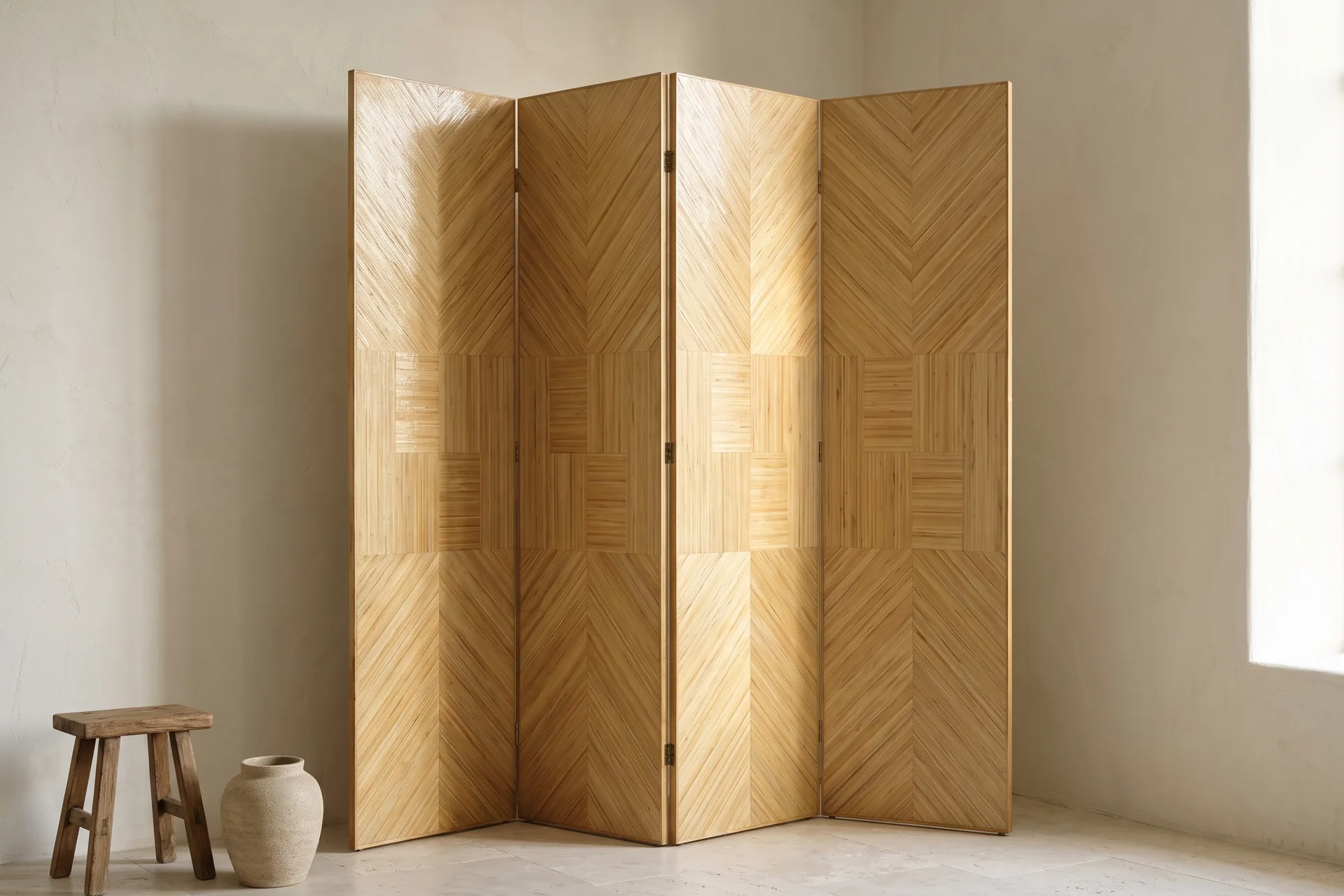
Coromandel screens, large folding screens of Chinese lacquer, were incised and filled with colour to show palaces, gardens and figures. They take their European name from the Coromandel Coast of India, through which many were shipped to Europe, where they were treasured in great houses and, much later, by the decorators of the twentieth century.
Europe and Art Deco Paris
Because the lacquer tree does not grow in Europe, workshops there developed their own imitation in the seventeenth and eighteenth centuries. Japanning built up layers of varnish, often black or red, and decorated them with raised and gilded scenes in the chinoiserie taste, on cabinets, clocks, boxes and panels. It is a craft with its own warmth and charm.
In the early twentieth century Paris discovered true lacquer anew. Jean Dunand made screens, furniture and panels of extraordinary depth, sometimes inlaid with fragments of crushed eggshell that glowed pale against the black. Eileen Gray, who learned the craft from the Japanese lacquer master Seizo Sugawara, created screens and furniture that brought the patience of Asian lacquer into the modern interior.
Their work gave lacquer a lasting place in the Art Deco salon: black and red grounds, gold and silver accents, and forms of great simplicity that let the surface speak.
Lacquer cannot be hurried, and its depth is simply time made visible.
Living with lacquer
Many modern pieces described as lacquered carry a different material. Contemporary furniture lacquers are synthetic finishes, usually sprayed in a few coats, that give a durable, even gloss in almost any colour, from deep ink to soft shell pink. They are practical and beautiful in their own right, and a good workshop will tell you exactly which kind of lacquer a piece carries.
Care is simple for both. Dust with a soft, dry cloth, and remove marks with a cloth barely dampened with water, then dry the surface at once. Keep abrasive cleaners and polishes away, keep the piece out of strong sun, which can fade colours over time, and set felt beneath objects so nothing scratches the surface.
The terms of the craft, from urushi and maki-e to japanning, are explained in the diselia Glossary.
A fine piece of lacquer asks for little and gives a great deal: a surface that changes from morning to evening, that holds the reflection of a room like a dark mirror, and that carries, in every layer, the hours of someone’s attention. Living with it is a daily reminder that some things are worth waiting for.
Tool06 diselia Glossary Materials, techniques and terms of the trade, from bouclé to verre églomisé. Open the toolQuestions and answers
What is urushi?
Urushi is the Japanese name for the sap of the lacquer tree, Toxicodendron vernicifluum, and for the lacquer made from it. Refined and often coloured, it is applied in many thin coats that harden in warm, humid air into a surface of great depth and remarkable durability.
Why does lacquer take so long to make?
Each coat must be thin, so it can harden without wrinkling, and urushi cures through a slow chemical reaction that needs warmth and humidity. Every coat is polished before the next is applied. Many layers are needed for real depth, so a fine piece may take a long time to complete.
How should lacquered furniture be cared for?
Dust with a soft, dry cloth and remove marks with a cloth barely dampened with water, drying the surface at once. Keep abrasive cleaners and polishes away, keep the piece out of strong sun and away from radiators, and set felt beneath objects so the surface stays unscratched.
Terms in this article
- Urushi
- The Japanese name for the sap of the lacquer tree and for the lacquer made from it, applied in many thin coats.
- Maki-e
- A Japanese lacquer technique in which metal powders are sprinkled onto a design drawn in wet lacquer, then fixed and polished.
- Coromandel screen
- A large Chinese folding screen of incised and coloured lacquer, named after the Indian coast through which many reached Europe.
Filed underatelierslacquerurushiscreenscraft