Hall VII, Fairs and Design WeeksCopenhagen, Stockholm, Helsinki4 min read
The Northern Design Weeks
Copenhagen, Stockholm and Helsinki: daylight, craft and the Nordic gift for simplicity.
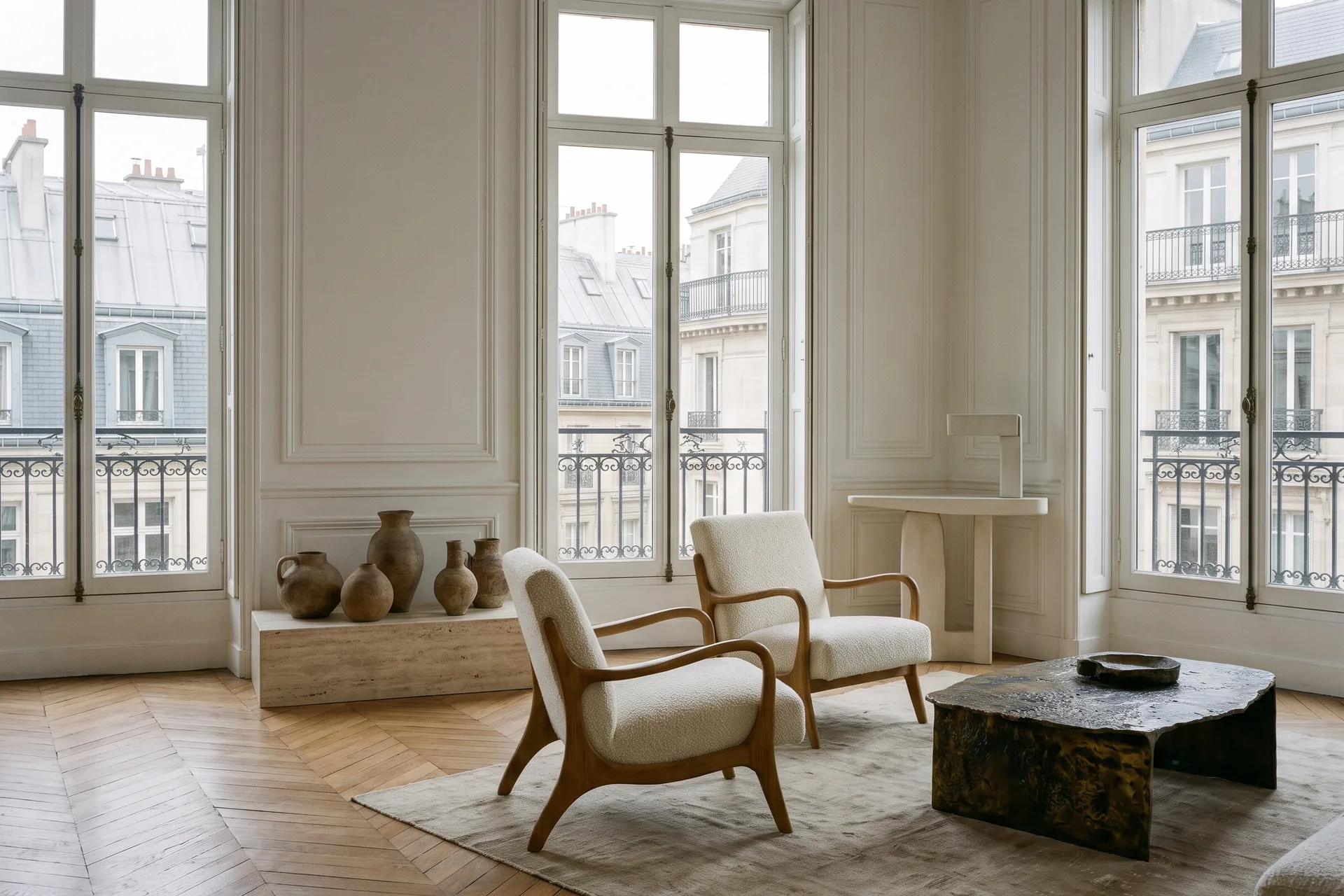
Light comes low across the water and fills a showroom through tall windows. Inside, a dining table of pale ash and a few chairs with woven seats stand beneath a single pendant, in perfect balance, and nothing else is needed. Copenhagen, Stockholm and Helsinki each hold a design week that carries this quiet clarity into the streets. Here is what makes the northern weeks distinct, and how to walk them.
At a glance
- Copenhagen, Stockholm and Helsinki each hold a design week rooted in the Nordic tradition.
- Nordic design values daylight, light woods, craft and the idea that good design belongs to everyone.
- Designmuseum Danmark, the Nationalmuseum and the Design Museum in Helsinki give each visit context.
- Walk or cycle between districts, combine showrooms with museums and architecture, and note materials.
Light, wood and simplicity
Nordic design grew from a particular light. Long, dark winters and luminous summers taught designers and builders to treasure daylight, to keep rooms pale and open, and to bring warmth indoors through wood, wool and candlelight. Birch, ash, pine and oak, left light and honest, became the natural materials of the northern home.
Craft runs deep in this tradition. Furniture makers, weavers, glassblowers and potters have long worked closely with designers, and the region is known for objects that are simple in form, careful in detail and made to last. Beauty is expected to serve daily life rather than stand apart from it.
Alongside craft stands a social idea: that good design should belong to everyone, in homes, schools, libraries and public spaces alike. That conviction shaped much of the twentieth century in the North, and it still gives the region’s design its generous, approachable character.
Copenhagen
In Copenhagen, 3daysofdesign is a festival spread across the city’s showrooms, studios and galleries. Rather than gathering in a single exhibition hall, it uses the city itself: courtyards, historic buildings, apartments and shops open their doors, and visitors move between them on foot or by bicycle, much as the people of Copenhagen do every day.
Designmuseum Danmark, housed in an elegant eighteenth-century building that was once a hospital, is the place to understand the background. Its collections trace Danish and international design and craft, and the Danish chair, in all its variety, holds a place of honour there.
The city is a design lesson even beyond the festival. Its cycle lanes, harbour baths and libraries show the Danish gift for practical beauty, and many residential streets reveal the same palette seen in the showrooms: brick, pale wood, white walls and generous windows. Plan to see architecture as well as furniture.
Stockholm
Stockholm Design Week brings its own programme to a city built on islands, where water and light are never far away. Between visits, a walk along the quays or across one of the many bridges restores the eye, and the city’s mix of grand stone facades and calm, light-filled interiors is a lesson in itself.
The Nationalmuseum, Sweden’s museum of art and design, holds collections that run from historic decorative arts to modern and contemporary design. An hour among its furniture, glass and ceramics shows how Swedish design moved from courtly splendour to the light, practical elegance for which it is so widely admired.
Look, too, for the Gustavian style of the late eighteenth century, with its pale painted furniture, soft greys and blues, and crisp cotton and linen. Its quiet, luminous palette still echoes in Swedish homes, and it explains much of the calm that visitors sense in the city’s interiors.
Helsinki
Helsinki Design Week brings design into the life of the Finnish capital, a city of granite, sea and generous public buildings. Finland’s design tradition is closely tied to nature: birch forests, lakes and the clear northern light all echo in its glass, its textiles and its furniture. The city’s markets, saunas and seaside paths belong to a visit as much as its exhibitions.
The Design Museum in Helsinki tells that story, from early craft to the modern classics of Finnish design. In and around the city, the work of Alvar Aalto is never far away: the great architect of Finnish modernism shaped buildings filled with daylight and furniture of bent birch whose soft curves brought warmth to modern rooms.
His belief that architecture and furniture should serve people gently, with natural materials and human proportions, remains one of the clearest expressions of the northern ideal.
In the North, simplicity is not an absence but a careful kind of warmth.
How to walk the northern weeks
The northern capitals are compact, walkable and made for slow discovery:
- Walk or cycle between districts
- Combine showrooms with museums and architecture
- Visit one museum early in your stay for context
- Look closely at materials: wood, wool, glass and clay
- Note pieces, makers and finishes as you go
- Leave time each day for a walk by the water
Light shapes these cities, so let it shape your days too. Plan showrooms with large windows for the brightest hours, and keep museums and quiet cafés for the softer light of late afternoon, when the water turns to pewter and the lamps come on inside.
Before you leave, step into a crafts market or a small design shop to see how these traditions live on in everyday things: a turned wooden spoon, a woven wool blanket, a simple glass that feels exactly right in the hand.
When you travel home, you may find that the northern weeks have changed how you see your own rooms. A window kept clear, a table of pale wood, a single good lamp, a wool throw on a chair: the Nordic gift for simplicity is easy to take with you, and it grows richer the longer you live with it.
Questions and answers
What is 3daysofdesign?
3daysofdesign is a design festival in Copenhagen that spreads across the city’s showrooms, studios and galleries rather than gathering in one exhibition hall. Visitors move between the venues on foot or by bicycle, discovering furniture, lighting and objects in the setting of real Copenhagen buildings.
Which design museums are worth visiting in the Nordic capitals?
In Copenhagen, Designmuseum Danmark traces Danish and international design and craft. In Stockholm, the Nationalmuseum holds collections of art and design from historic decorative arts to modern pieces. In Helsinki, the Design Museum tells the story of Finnish design. Each makes an ideal first stop during a design week.
What defines Nordic design?
Nordic design values daylight, light woods such as birch, ash and oak, fine craft and simple, useful forms made to last. It also carries a social idea, that good design should belong to everyone, which gives it a warm and approachable character in homes and public buildings alike.
Terms in this article
- Nordic design
- The design tradition of Denmark, Finland, Iceland, Norway and Sweden, known for light woods, craft and simple, useful forms.
- Bent birch
- Birch wood, often laminated, bent into soft curves for furniture, a technique closely associated with Finnish modernism.
- Designmuseum Danmark
- The Danish museum of design and decorative arts in Copenhagen, housed in a former eighteenth-century hospital.
Filed underfairscopenhagenstockholmhelsinkinordic