Hall II, LightingAlabaster and glass5 min read
Lamps as Sculpture
Alabaster, blown glass and glazed clay: table and floor lamps that are objects first and light second.
On a console in a quiet hall, a lamp of carved alabaster is switched on at dusk. The stone, milky and cool by day, begins to glow from within, its veins suddenly drawn in amber. Lamps like this are objects first and light second: they hold a room even when they are dark. This guide explores their materials, the proportions that make a lamp look right and the art of placing them.
At a glance
- Alabaster is a translucent form of gypsum that glows warmly when lit from within.
- Mouth-blown glass, glazed ceramic, plaster and patinated bronze give lamps a sculptural presence.
- The shade is about two thirds of the base height and wider than the base.
- Place the lower edge of the shade at seated eye level so the bulb stays hidden.
Stone that glows
Alabaster is a fine-grained, translucent form of gypsum, soft enough to be carved and turned by hand. Lit from within, it glows with a warm, diffuse light, and its veins and clouds appear as if drawn onto the surface. The Tuscan town of Volterra has been a centre of alabaster carving for centuries, and the stone has long been shaped into lamps, bowls and vases.
Each piece is unique, because no two blocks share the same pattern of veining. Some alabaster is almost white, some honey-coloured, some clouded with grey or amber, and the thickness of the wall decides how much light passes through. A thin bowl glows brightly; a thick, carved base gives a deeper, more mysterious light.
Being soft, alabaster asks for gentle care. Dust it with a dry, soft cloth, keep it away from water and damp rooms, and choose LED lamps, which stay cool. Treated with this respect, the stone keeps its quiet glow for generations.
Glass, clay and bronze
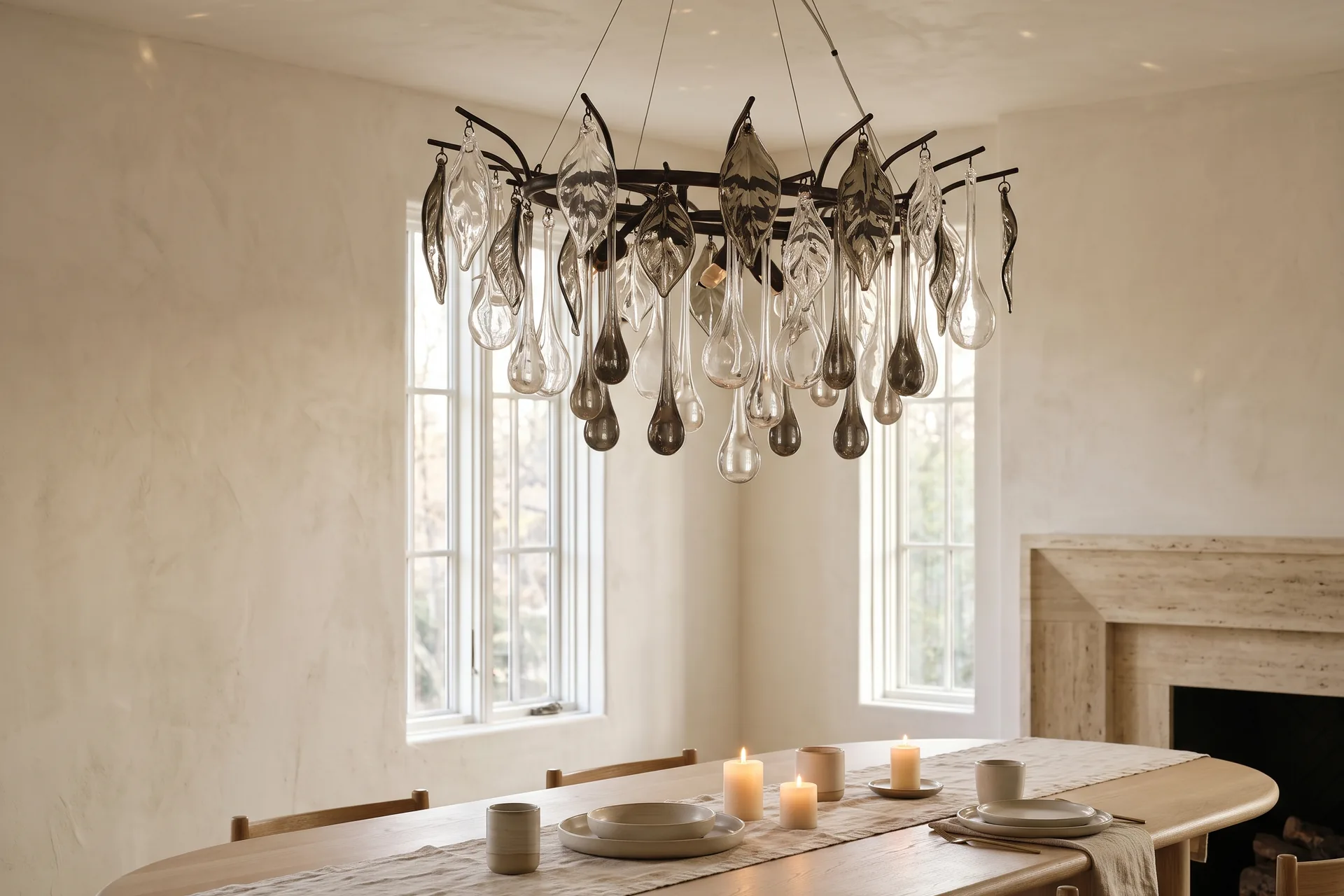
Mouth-blown glass gives a lamp depth and movement. Opal glass diffuses light evenly; clear or tinted glass shows the bulb as a small glowing core; glass blown with bubbles or ripples scatters light into soft patterns. Because each piece is shaped by breath and hand, its small irregularities are part of its beauty. Coloured glass, in smoke, amber or a pale green, tints the light itself and warms the wall behind it.
Glazed ceramic brings colour and texture: a celadon glaze with the soft green of jade, a crackle glaze whose fine lines catch the light, a matt stoneware base with the warmth of earth. Plaster, white and chalky, gives sculptural forms the stillness of a gallery, while patinated bronze lends weight and the slow, deep colour of age.
Paper lanterns come from long traditions in Japan and China. Paper stretched over a frame of bamboo or fine wire becomes a glowing volume, light as air. Japanese washi, made from long plant fibres such as the inner bark of the paper mulberry, filters light into a soft, even radiance that suits calm rooms and low furniture.
Proportions that look right
A sculptural lamp may break the rules, but most table lamps look their best when a few proportions are respected.
- The shade is about two thirds of the height of the base
- The shade is wider than the widest part of the base
- The lower edge of the shade sits roughly at the eye level of a seated person
- The bulb stays hidden from every chair in the room
These rules of thumb keep a lamp in balance. A shade that is too small makes the base look heavy; one that is too tall swallows the base and hides its form. Measure from the floor to the eye level of someone sitting in the nearest chair: the lower edge of the shade should sit roughly there, so that the light falls on the page and the bulb remains unseen.
The shade completes the sculpture. Linen gives a warm, slightly textured glow; silk is smoother and more luminous; pleated paper adds rhythm and a fine play of light and shadow. Opaque shades send light down and up in two pools, while pale, translucent ones spread it softly through the room.
Floor lamps follow the same logic on a larger scale. Beside a reading chair, the shade works best a little above the shoulder of the seated reader and slightly behind the chair, so that light falls over the page without glare. Sculptural floor lamps in bronze, turned wood or paper can also stand in an empty corner like a figure, lighting the walls as much as the room.
Placing lamps as objects
Lamps at different heights give a room its depth. A floor lamp beside an armchair, a table lamp on a side table and a small lamp on a bookshelf create light at three levels, and the eye travels between them as through a landscape. Each pool of light invites you to a different place in the room.
Pairs bring order and calm: two matching lamps on a console, at both ends of a sofa or on either side of a bed. A single sculptural lamp, by contrast, is best treated as an object. Set it on a console or a sideboard with little around it, perhaps a book or a bowl, and let it be admired by day as much as it is used by night.
Choose warm white bulbs of 2700 K with good colour rendering, so that alabaster glows amber, glass looks clear and ceramic glazes keep their depth. A dimmer, on the lamp or at the socket, lets each piece become a soft presence in the evening, one voice among the other layers of light.
A beautiful lamp is still a sculpture when its light is switched off.
Over time, such lamps become the quiet landmarks of a home: the alabaster glow in the hall that greets you at night, the glass globe on the desk, the ceramic base whose glaze seems to change with the seasons. They give light, and they give the room something worth looking at.
Questions and answers
How do I care for an alabaster lamp?
Alabaster is soft and sensitive to water, so dust it gently with a dry, soft cloth and keep it away from damp rooms and spills. Choose LED lamps, which stay cool, and handle the stone with clean, dry hands. With this care its glow remains clear for decades.
How large should a lampshade be?
As a rule of thumb, the shade is about two thirds of the height of the base and wider than its widest part. Its lower edge should sit roughly at the eye level of a seated person, so that the bulb stays hidden and the light falls where you need it.
Which bulbs suit sculptural lamps?
Warm white bulbs of about 2700 K with good colour rendering suit most sculptural lamps. They make alabaster glow amber, keep glass clear and let ceramic glazes show their depth. A dimmer allows each lamp to become a soft, quiet presence in the evening.
Terms in this article
- Alabaster
- A fine-grained, translucent form of gypsum, soft enough to carve by hand, that glows warmly when lit from within.
- Washi
- Traditional Japanese paper made from long plant fibres, such as the inner bark of the paper mulberry.
- Celadon
- A ceramic glaze in soft green or blue-green tones, first developed in China and prized for its likeness to jade.
Filed underlightinglampsalabasterglassceramics